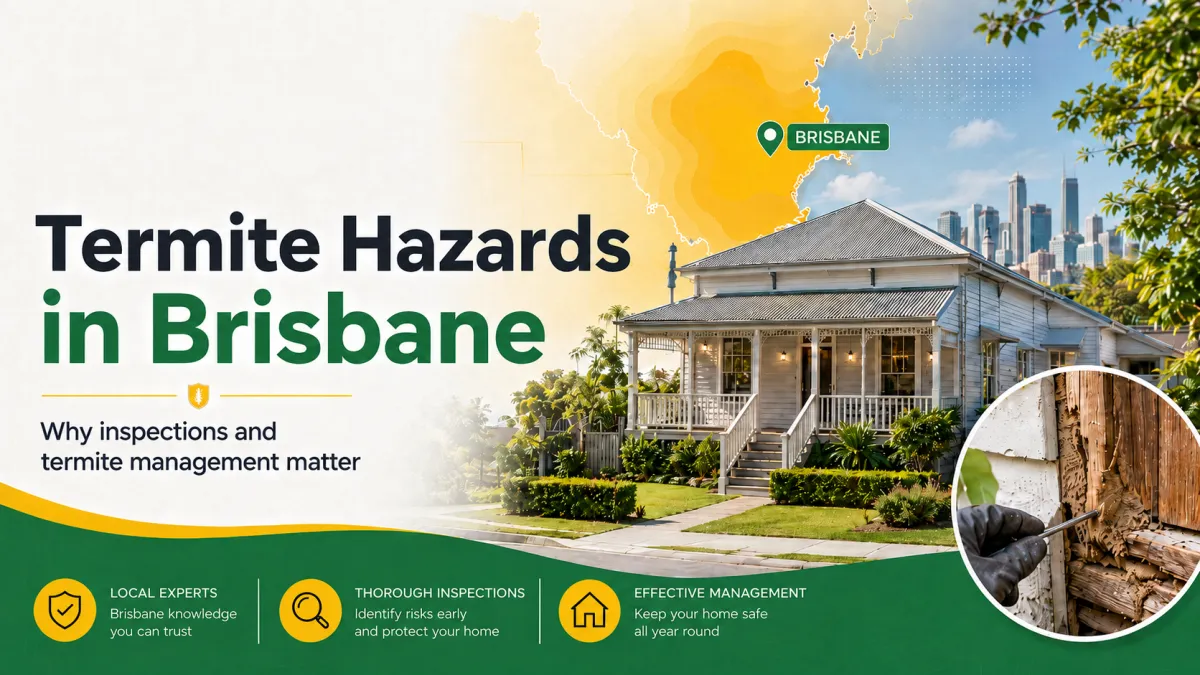
Brisbane is a very high termite hazard zone. Learn why inspections protect your property.
Termite Hazards in Brisbane: Why Regular Inspections and Termite Management Matter
Brisbane is one of Australia’s higher-risk areas for termite activity. Our warm climate, seasonal rainfall, humidity, established suburbs, and large number of timber-framed homes create ideal conditions for termites to live, forage, and attack buildings.
CSIRO reporting on termite survey and hazard mapping identifies Brisbane as being in a very high termite hazard zone. This does not mean every property will have termites, but it does mean the environmental conditions in and around Brisbane are highly suitable for termite activity. For homeowners, property managers, and business owners, this makes regular termite inspections and effective termite management an important part of protecting the property.
Why Brisbane Is a High-Risk Area for Termites
Termites are a natural part of the Australian environment. They play an important role in breaking down timber and organic material. The problem starts when they find access into homes, commercial buildings, fences, retaining walls, landscaping timbers, sheds, or other timber structures.
Brisbane properties can be particularly vulnerable because termites are attracted to conditions commonly found around homes and businesses, including:
Moisture around foundations, garden beds, bathrooms, laundries, subfloors, and leaking plumbing
Timber in direct contact with soil
Stored timber, firewood, cardboard, or building materials kept close to walls
Garden beds, mulch, and landscaping built against the structure
Poor drainage or areas where water pools after rain
Gaps, cracks, pipe penetrations, or concealed entry points around slabs and walls
Buildings with no current termite management system in place
CSIRO reporting notes that termite distribution is strongly influenced by temperature, followed by rainfall. This is important for Brisbane because our warm climate and seasonal moisture create conditions that can support termite activity throughout much of the year.
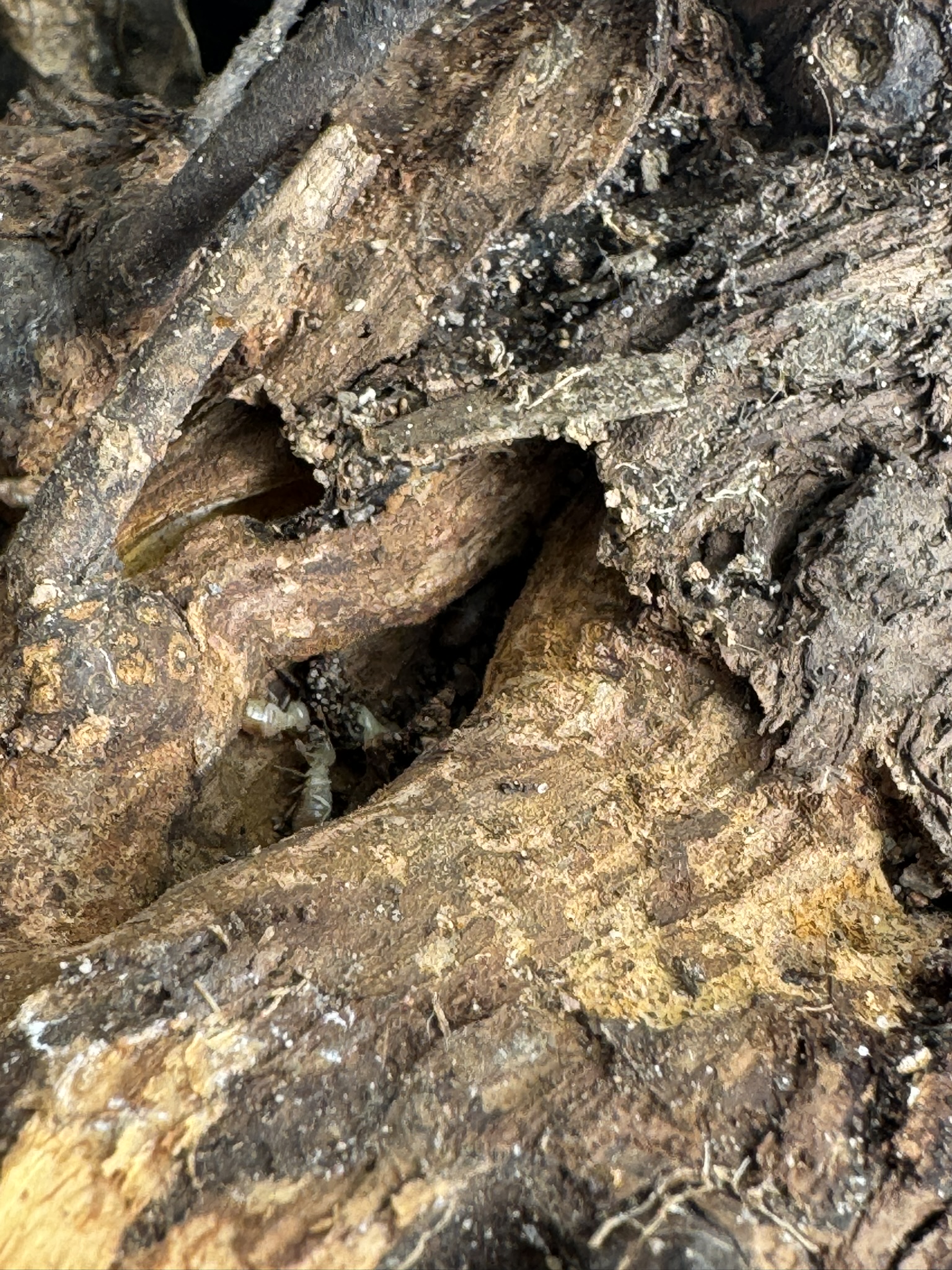
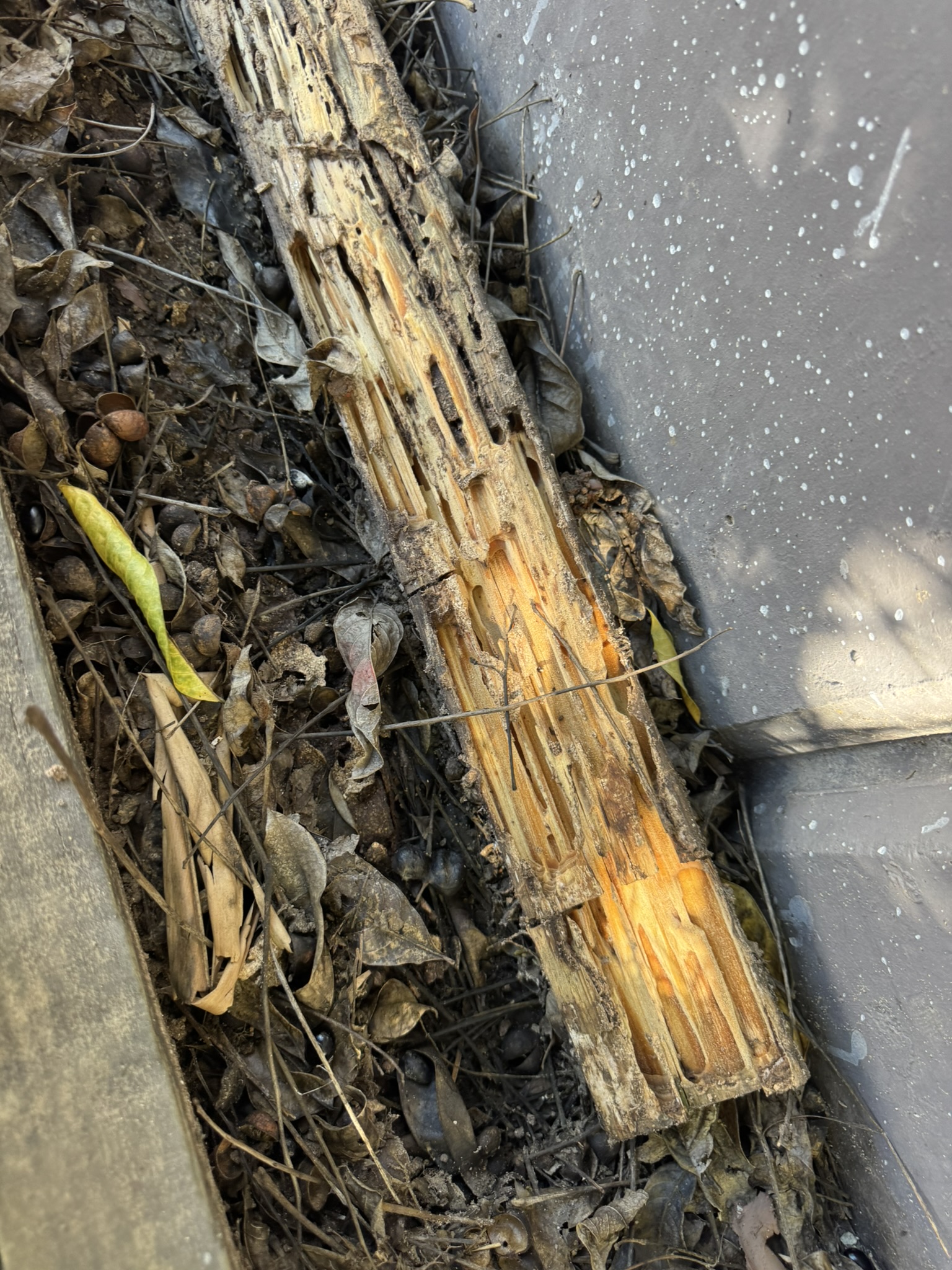
Termites do not need a large opening to enter a building. They can travel through concealed areas and remain hidden for long periods before visible damage is noticed. By the time bubbling paint, hollow-sounding timber, damaged skirting boards, mud leads, or live termites are found, the colony may already have caused significant damage.
What Does “Very High Termite Hazard” Mean?
The CSIRO termite hazard mapping places different regions of Australia into termite hazard categories based on the likelihood and severity of termite pressure. Brisbane sits within the very high hazard rating, which is the highest level shown on the map below.
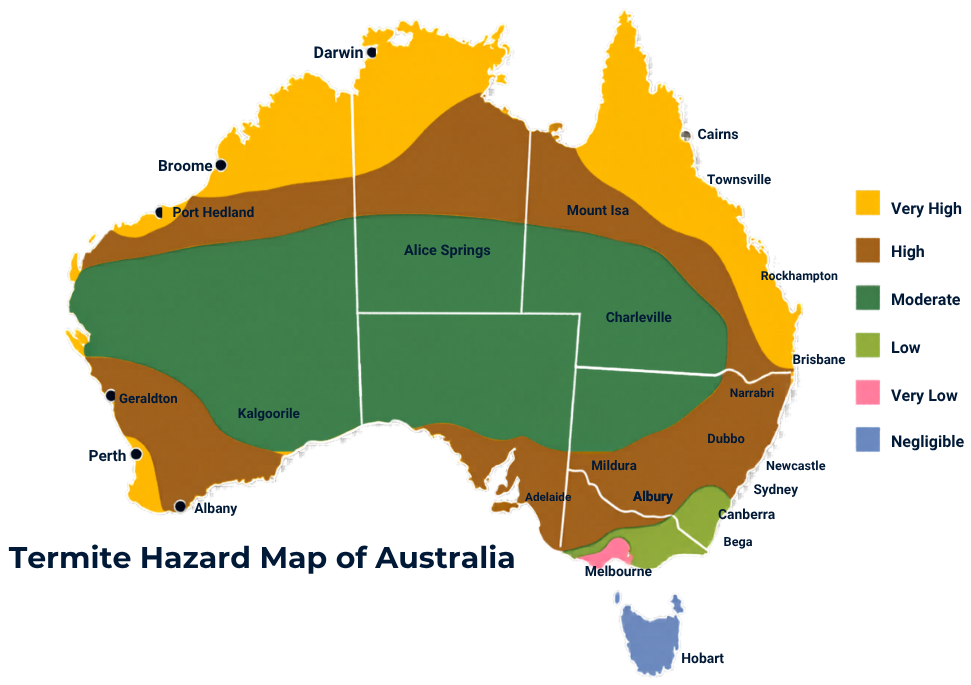
For property owners, this rating should be treated as a practical warning. It means termite activity is not rare or unusual in our region. It is something that should be actively managed, especially for homes and businesses with timber elements, gardens close to the building, older construction, subfloor areas, or a history of termite activity nearby.
The CSIRO report also makes an important distinction between termite hazard and actual building risk. Hazard relates to the termite pressure in the environment, while the actual risk to a particular building can depend on factors such as construction type, age, existing termite protection, maintenance, moisture conditions, and whether regular inspections are being carried out.
In Brisbane, termite protection should not be treated as a once-off task. It should be viewed as an ongoing property maintenance issue, similar to checking plumbing, roofing, drainage, electrical safety, or building condition.
Older Homes and All Construction Types Can Be at Risk
One of the important findings from the CSIRO reporting was that house age was a major factor affecting termite incidence inside homes. This is highly relevant across Brisbane, where many suburbs include older homes, post-war houses, Queenslanders, renovated properties, and mixed-construction buildings.
However, termite risk is not limited to older timber houses. The CSIRO report also found that termite activity inside houses was not significantly affected by construction type. This means that homes built with timber, masonry, concrete, steel, or mixed materials can still be vulnerable.
A concrete slab, brick exterior, or steel frame does not automatically make a property termite-proof. Termites may still gain concealed access through cracks, joints, service penetrations, weep holes, garden beds, plumbing entries, retaining walls, or areas where soil, moisture, or landscaping hides the edge of the building.
Termites Can Affect Homes and Businesses
Most people think about termites in relation to houses, but commercial properties are also at risk. Offices, shops, warehouses, cafes, childcare centres, medical practices, community buildings, and industrial sites can all be impacted.
For businesses, termites can create more than just repair costs. They can also cause disruption to operations, damage to fixtures and fittings, safety concerns, and issues for landlords, tenants, insurers, and property managers.
A proactive termite management plan helps reduce the risk of major disruption and gives property owners better information about what is happening around the building.
Why Regular Termite Inspections Are Vital
A professional termite inspection is designed to identify signs of termite activity, termite damage, and conditions that may increase the risk of attack. This includes checking accessible areas of the property such as the building interior, exterior, roof void, subfloor where accessible, fences, trees, stumps, gardens, retaining walls, sheds, and surrounding areas.
CSIRO reporting found that termites inside houses were often located in walls, flooring, house stumps, architraves, skirting boards, joists, bearers, and window frames. Outside the home, termite activity was commonly associated with wood piles, branches, live and dead trees, fencing, sleepers, dead tree stumps, and garden sheds.
This supports the need for a full property inspection, not just a quick look inside the house. In many cases, the conditions that increase termite risk are found around the outside of the building before termites are detected inside.
Regular inspections are important because termites can move quickly and conditions around a property can change. A leaking tap, new garden bed, blocked drain, stored timber, or cracked concrete edge can create an opportunity for termites to access the building.
For Brisbane properties, an annual termite inspection is generally recommended as a minimum. Higher-risk properties, properties with previous termite activity, or buildings with known conducive conditions may require more frequent inspections.
Termite Management Is About More Than Treatment
Effective termite management is not just about applying a chemical or installing a bait station. It involves understanding the property, identifying termite pressure, reducing conducive conditions, and choosing a system that suits the site.
Depending on the building and the level of risk, termite management may include:
Regular visual termite inspections
Chemical termite treatment zones
Termite baiting and monitoring systems
Above-ground baiting for active termite infestations
Dusting or targeted treatment of active termite galleries
Reducing moisture problems and improving drainage
Removing timber-to-soil contact
Managing garden beds, mulch, landscaping timbers, and stored materials
Ongoing monitoring and maintenance
The right approach depends on the property design, access, construction type, termite activity, soil conditions, previous treatments, and the owner’s goals.
Do Not Disturb Active Termites
If you find live termites, mud leads, damaged timber, or suspicious activity, it is important not to spray them with household insecticides, break open more timber, or disturb the area unnecessarily.
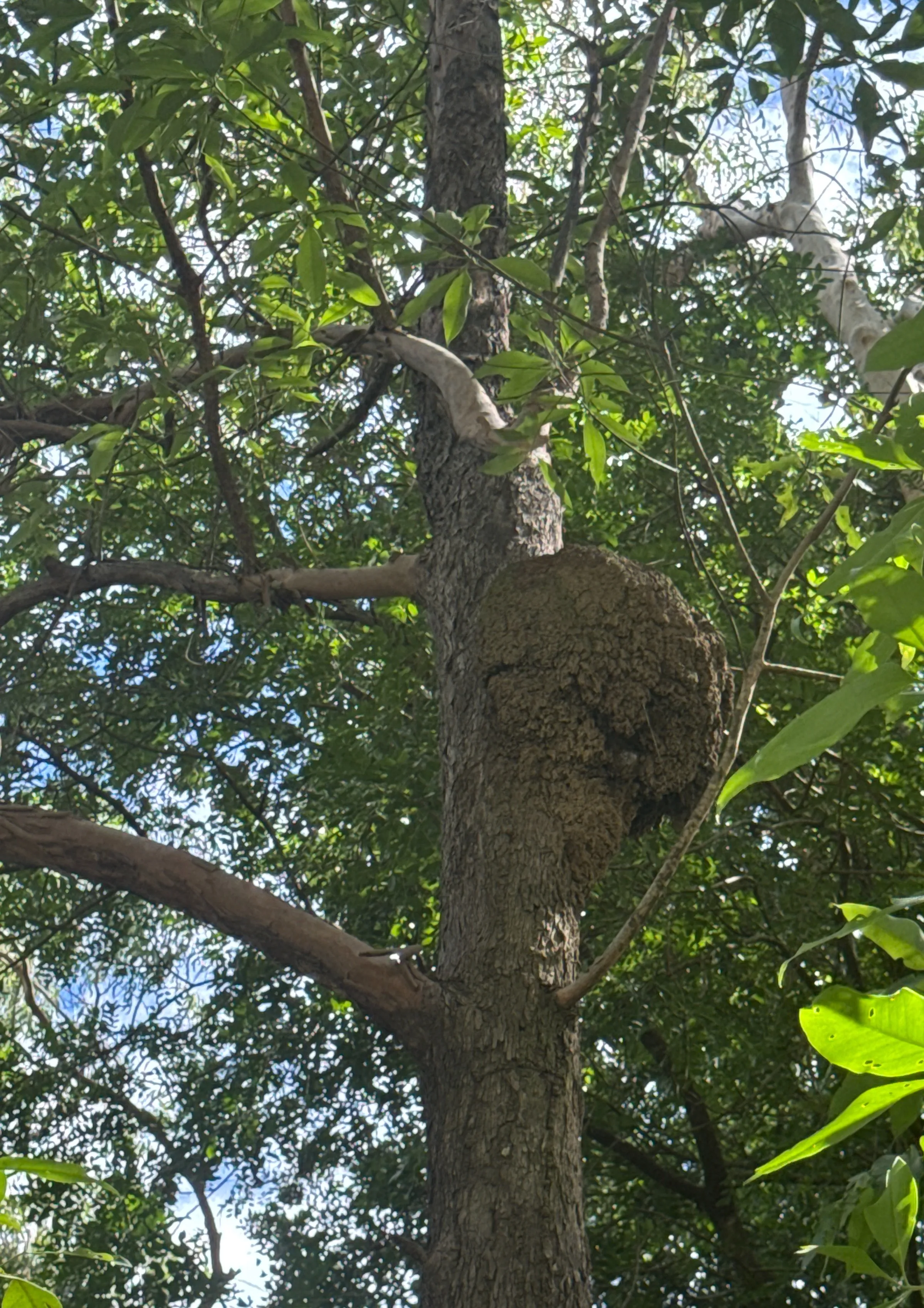
CSIRO reporting found that termite eradication was most successful where soil or wood was chemically treated. The least successful approaches included ignoring the problem or simply disturbing the affected area.
This is why disturbing active termites can make the problem harder to manage. Termites may retreat from the area, move to another part of the structure, or become harder to locate during an inspection. If possible, cover the disturbed area lightly and arrange a professional termite inspection as soon as possible.
A trained technician can assess the activity, identify likely entry points, and recommend a treatment strategy that is suitable for the property.
Protecting Your Brisbane Property
Because Brisbane is in a very high termite hazard zone, the best approach is prevention, early detection, and ongoing management. Waiting until termites are visible can result in more damage, higher repair costs, and fewer treatment options.
A professional termite inspection and management plan can help you:
Understand your property’s termite risk
Identify active termites or previous damage
Find conditions that may attract termites
Choose an appropriate termite management system
Reduce the chance of costly hidden damage
Protect the value and safety of your home or business
Book a Termite Inspection in Brisbane
At Booma Pest Control, we help Brisbane homeowners and businesses identify termite risks, manage active termite issues, and put practical termite management systems in place.
If your property has not had a recent termite inspection, or if you have noticed signs of termite activity, now is the time to act. Brisbane’s very high termite hazard rating means termite management should be a regular part of protecting your property.
Contact Booma Pest Control to arrange a professional termite inspection and discuss the best termite management options for your home or business.